
How to Make a Builder-Grade Home Feel Custom and Collected
Builder-grade homes are functional but often lack personality. Standard finishes, uniform cabinetry, and repetitive layouts make spaces feel impersonal. The challenge is creating a home that feels curated, intentional, and tailored to the people who live there. The transformation comes not from overhauling everything, but from layered, deliberate decisions that enhance function, proportion, and style.
1. Define Zones Through Layout and Furniture
Even if the floor plan is fixed, how you use the space can make it feel custom. Properly defining zones gives a builder-grade home a sense of purpose.
Examples:
In an open-concept living/dining area, use a sectional and a pair of chairs to create a living zone, and a console table to separate the dining area without closing it off.
A loft or bonus room can be divided into play, study, and relaxation zones with area rugs and low shelving rather than walls.
Ensure circulation paths are at least 36–42 inches wide in main traffic areas, which creates a sense of spaciousness and flow.
These subtle moves make the space feel intentional instead of generic.

2. Upgrade Key Finishes to Add Character
Minor finish upgrades go a long way in elevating a standard home. Choose interventions that are visible, tactile, and repeat throughout the home.
Practical strategies:
Replace builder-standard cabinet hardware with brushed brass, matte black, or polished nickel for a subtle but noticeable upgrade.
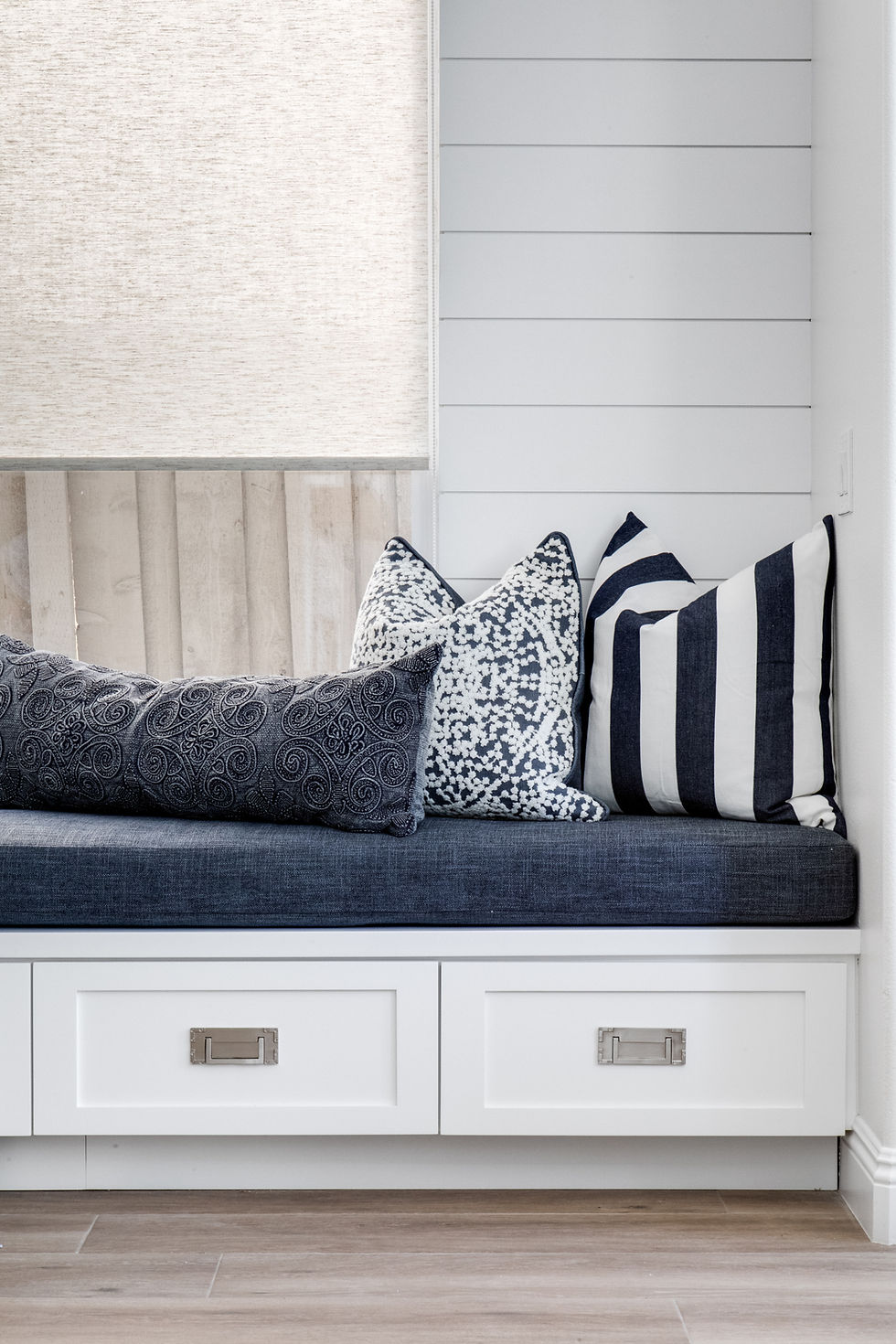
Add simple millwork details, like shaker-style trim, paneling on a feature wall, or built-in bookcases, to give rooms depth.
Swap flat, standard light fixtures for layered lighting: pendants over the kitchen island, sconces in hallways, and table lamps in living areas.
Consider a higher quality paint finish—eggshell or satin instead of flat—for trim and doors to reflect light and feel more refined.
These interventions are measurable, and they instantly feel more custom without a full renovation.
3. Furnishings as Anchors
Furniture is the tool that transforms space. In builder-grade homes, scale and placement often feel off because standard layouts don’t match standard furniture sizes.
Specific approaches:
Measure each room before selecting pieces. A large sectional may dwarf a living room in a tract home, while a sofa paired with an armchair provide balance.
Mix upholstered pieces with different heights and profiles to create layers. For example, pair a low sofa with a higher armchair to add visual interest.
Incorporate multifunctional pieces, like an ottoman that serves as seating and storage, to reduce clutter in tight spaces.
Avoid floating everything against walls. Pull furniture inward to create conversation areas and natural flow.
Thoughtful furnishings define each room’s function and make the layout feel intentional.

4. Layer Textures, Patterns, and Artifacts
A collected home feels lived-in and layered, not staged. Use textures, patterns, and curated objects to add depth.
Examples:
Mix materials such as wood, metal, glass, and linen to create tactile richness.
Introduce a patterned rug to anchor a seating area and add personality.
Curate shelves with books, art, and small objects that reflect the family’s personality.
Rotate seasonal decor or personal items subtly; even small changes prevent the home from feeling static.
Layering is what transforms a generic house into a home with a unique narrative.
5. Cohesion Across Rooms
A home feels collected when choices in one room relate to the next. This is less about matching and more about echoing colors, finishes, and textures thoughtfully.
Practical tactics:
Carry a common metal finish across light fixtures and hardware for subtle continuity.
Repeat accent colors in textiles, throw pillows, or artwork to create visual links between spaces.
Maintain consistency in ceiling and trim paint colors to prevent abrupt transitions.
These small visual threads give the home an intentional, cohesive feel without feeling manufactured.
6. Layer in Personal Touches
The final layer is always personal. A home that feels custom reflects the people who live there.
Ideas:
Display family collections in a curated, balanced way rather than scattering items randomly.
Include meaningful artwork or objects as focal points.
Style surfaces to support daily life—like a functional entry console for keys and mail—while keeping them visually polished.
Personal touches make the home feel authentically yours rather than a model home.
Why It Works
Transforming a builder-grade home into a custom, collected space is about intentionality at every level. From furniture placement to finishes, textures, and personal details, each decision builds on the last. The result is a home that works for daily life, feels elevated, and truly reflects the family who lives there.
Even without major construction, these layered, deliberate interventions make a space feel thoughtfully designed and uniquely yours.


Comments